
07881 375985
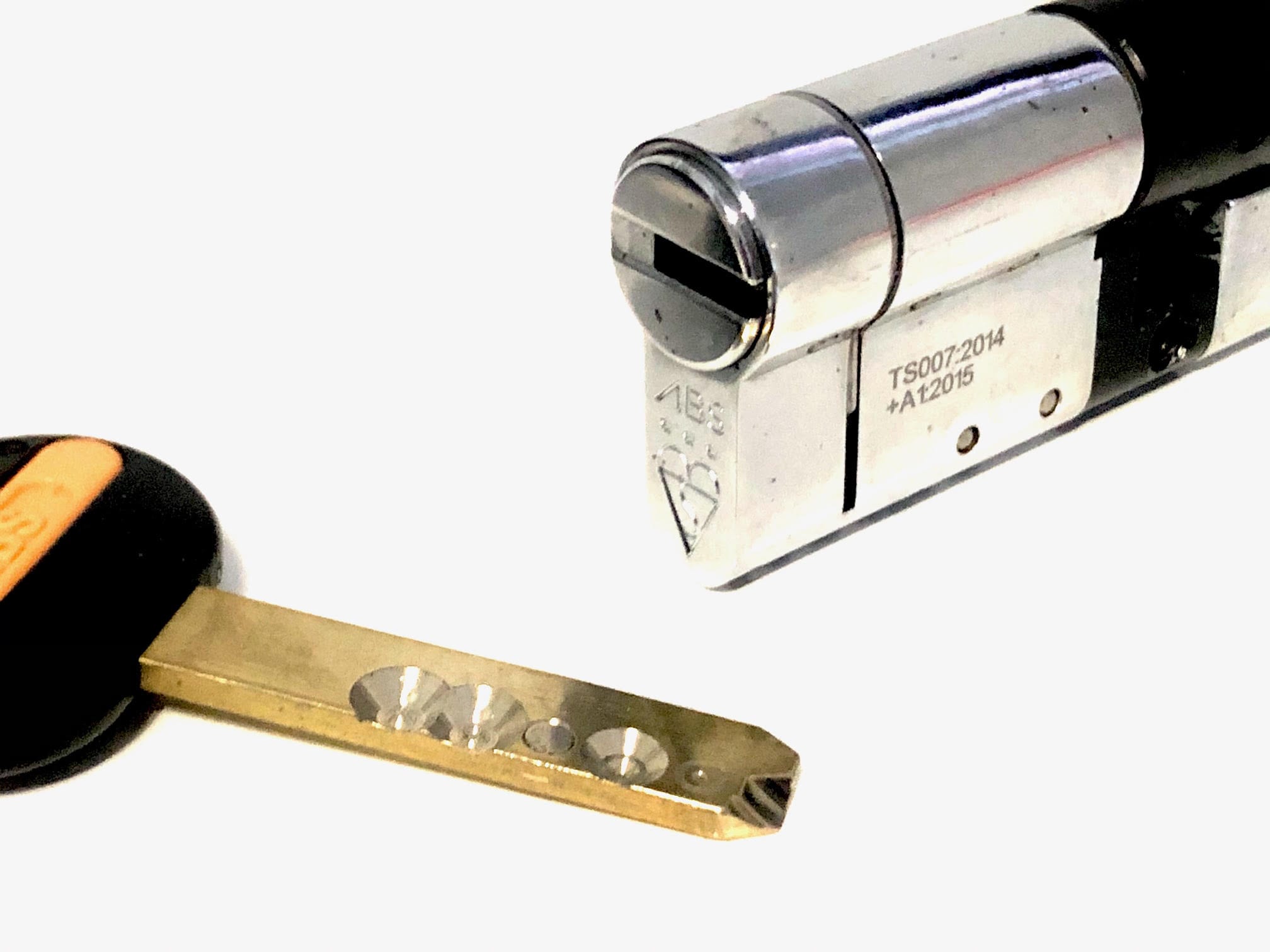
If you’ve ever wondered what anti-snap locks are, you’re already asking the right question. Lock snapping is a common method used by burglars to break into a property, and it often targets the humble euro cylinder lock found on many uPVC, timber, and composite door setups.
Here’s the thesis: this guide will explain what lock snapping is, how anti-snap door locks keep the locking mechanism protected, what “tested for snapping” actually means in the real world, and how to make sure your door stays secure in practice, not just on paper. You’ll also get a perspective that most competing articles skip: anti-snap cylinders are important, but they are only one part of a door’s security story, and sometimes they get sold as a miracle fix when the real weakness is elsewhere.
Before you can decide whether you need anti-snap door locks, it helps to understand what burglars are trying to do.
Lock snapping (often called cylinder snapping) is an attack on lock cylinders, specifically the cylinder in a standard Euro cylinder setup. The aim is to fracture the cylinder so the attacker can manipulate what’s left and gain entry.
What makes it so frustrating is that it can be quick and doesn’t require much finesse. That’s why it’s described so often as a common method of forced entry. The door might have a multi-point locking system, but if the cylinder that controls it is compromised, the rest of the system can become far easier to defeat.
A lot of people assume “multi-point lock” automatically means “secure locks”. Not always.
A multi-point strip can be strong, but the cylinder is the control point. If the cylinder can be attacked, the attacker is effectively trying to bypass the whole door by attacking its smallest, most accessible component.
One detail that matters more than many homeowners realise is cylinder protrusion. When the cylinder sticks proud of the handle, it gives someone something to grip. Even a decent cylinder can become a soft target if it’s poorly sized.
Most competitor pages treat lock snapping as a simple checklist problem: “buy a 3-star cylinder and you’re done.” In reality, lock snapping is often an opportunistic attack. Burglars are trying to gain entry fast and quietly. If your door is visibly awkward to attack because the cylinder sits flush, the handles are reinforced, and the fit is tidy, you’re already changing the risk equation. That “boring” install detail can be as valuable as the brand name printed on the box.
Let’s get to the heart of what are anti-snap locks and why they matter.
Anti-snap cylinders are designed with engineered weak points, often described as snap lines (or a sacrificial snap line). The idea is simple: if force is applied, the cylinder is encouraged to break at a controlled point that leaves the locking mechanism protected deeper inside the door.
In other words, the lock may snap, but it snaps “safely”. The attacker breaks off the section they can grab, while the critical part of the cylinder stays out of reach with the mechanism intact.
This is why you’ll sometimes see the phrase “break-away section” used. It sounds counterintuitive, but it’s the point. The cylinder sacrifices the exposed portion to protect the part that actually makes the lock work.
Plenty of products claim they’re snap-resistant, snap-proof, or anti-snap. The problem is that those words can be used loosely in marketing.
In practice, “tested for snapping” matters most when it’s backed by recognised standards. The two you’ll see repeatedly in the UK are:
Police guidance also points homeowners towards cylinders that achieve TS 007 and or SS312 for improved resistance.
Burglary levels move over time and vary by area, so sweeping “everyone is at risk” claims can be a bit lazy. Still, burglary remains a real issue, and the Office for National Statistics publishes household crime data that shows it’s not a problem you can ignore.
What’s more useful than blanket fear is understanding the pattern: most snapping attacks are about speed. A burglar trying to break into a property wants a quick win. Anti-snap door locks are designed to take that quick win away.
Here’s the perspective that’s often missing from the top-ranking pages: a certified cylinder does not automatically create a secure door.
Even the best anti-snap cylinder can underperform if:
So yes, standards matter, but installation quality often decides whether that cylinder performs the way the lab test assumed it would.
This section is where your article can win trust. People reading about what anti-snap locks usually want to know what to buy, how to check, and whether it’s worth the hassle.
Anti-snap cylinders are designed to stop a specific attack: lock snapping. They make that common method far harder and usually far slower. That alone is a big win.
But it would be misleading to imply they make break-ins impossible. A determined attacker can switch tactics, target another entry point, or exploit a different weakness in the door set. The goal is not perfection. It’s making your door a poor choice compared to the next one.
Start with what you can observe and verify:
Look for recognised marks rather than vague claims. TS 007 solutions are typically associated with a 3-star Kitemark approach, and SS312 Diamond products are listed through Sold Secure’s lock cylinder category.
Also, check the physical fit. If the cylinder sits noticeably proud of the handle, it may be easier to attack, even if it’s a modern cylinder. The fit is not glamorous, but it’s central to how well the locking system holds up.
If you’re unsure, a professional locksmith can identify the cylinder, measure it properly, and tell you whether the setup is genuinely helping.
Most of the time, you can upgrade just the cylinder. Many guides try to upsell a full door replacement, but it depends on what you have.
If your door is structurally sound, the frame is solid, and the hardware is decent, swapping a standard euro cylinder for an anti-snap cylinder can be a high-impact upgrade.
On the other hand, if the door is flimsy, warped, or has weak keeps and hinges, a premium cylinder may be “too good for the door”. In that situation, you might still fit anti-snap door locks for immediate improvement, but you should also think about whether the rest of the door set needs attention.
A successful snapping attempt on an anti-snap cylinder often results in a broken outer section, but with the mechanism intact behind the snap line. That is exactly what it’s designed to do.
The downside is practical: after an attempted attack, you may need the cylinder replaced quickly. In other words, anti-snap locks can preserve security, but you still might be calling someone out because you need the lock to work properly again. That’s an inconvenience, yet it’s still better than waking up to a door that no longer protects you.
For most homes with Euro cylinders, yes. Anti-snap locks don’t just add protection. They add peace of mind because they address a widely known vulnerability in many door types, including uPVC and composite door installations.
Just avoid the trap of thinking the cylinder alone is the entire solution. Treat it as the anchor of your door security, not the whole chain.
Most competitor articles focus on the cylinder’s internal features and stop there. Let’s add the missing layer: how your door set behaves as a system.
When people ask what are anti snap locks, they’re often asking “what should I buy?” A better question is “what should I fix first?”
Anti-snap cylinders are most effective when they’re paired with sensible supporting choices:
What’s the unique insight here? Attack displacement. Burglars often switch to the easiest option available. If you fix the lock cylinder but leave an easy-to-force rear door, a weak latch, or a dodgy patio lock, you might simply push the problem elsewhere. That doesn’t make anti-snap cylinders pointless. It just means you should use them as the starting point of a broader door check.
One reason lock snapping is so effective is that it can be less noisy than smashing glass. But homeowners sometimes over-correct by chasing dramatic solutions like cameras and lights while ignoring the basic mechanics of the door.
A well-fitted anti-snap cylinder, combined with a tidy flush fit and decent hardware, is a quiet, boring upgrade. It’s also one of the most evidence-led things you can do for many Euro-cylinder doors.
So, what are anti-snap locks in plain terms? They’re lock cylinders built to resist lock snapping by breaking at engineered snap lines, keeping the locking mechanism protected and leaving the mechanism intact where it matters most. They’re especially relevant if your door uses a euro cylinder lock, which is common across uPVC, timber, and composite door setups.
The real takeaway is this: anti-snap door locks are a smart upgrade, but their performance depends on the whole door setup, especially sizing and installation. If you want genuine peace of mind, treat your door like a system, not a single part.
If you’re not sure what cylinder you have or whether yours has been tested for snapping, book an inspection with a professional locksmith who can measure your lock correctly and confirm whether your current setup is genuinely secure. Using a vetted directory can help you avoid poor-quality emergency callouts.
Call for immediate assistance at home or at work in Barnsley, Sheffield, Rotherham, Doncaster and across South Yorkshire.
As your local emergency locksmith we can help you with:
Locked Out
Lost Keys
Broken Keys
Faulty Locks
Replacement Locks
Door Repairs